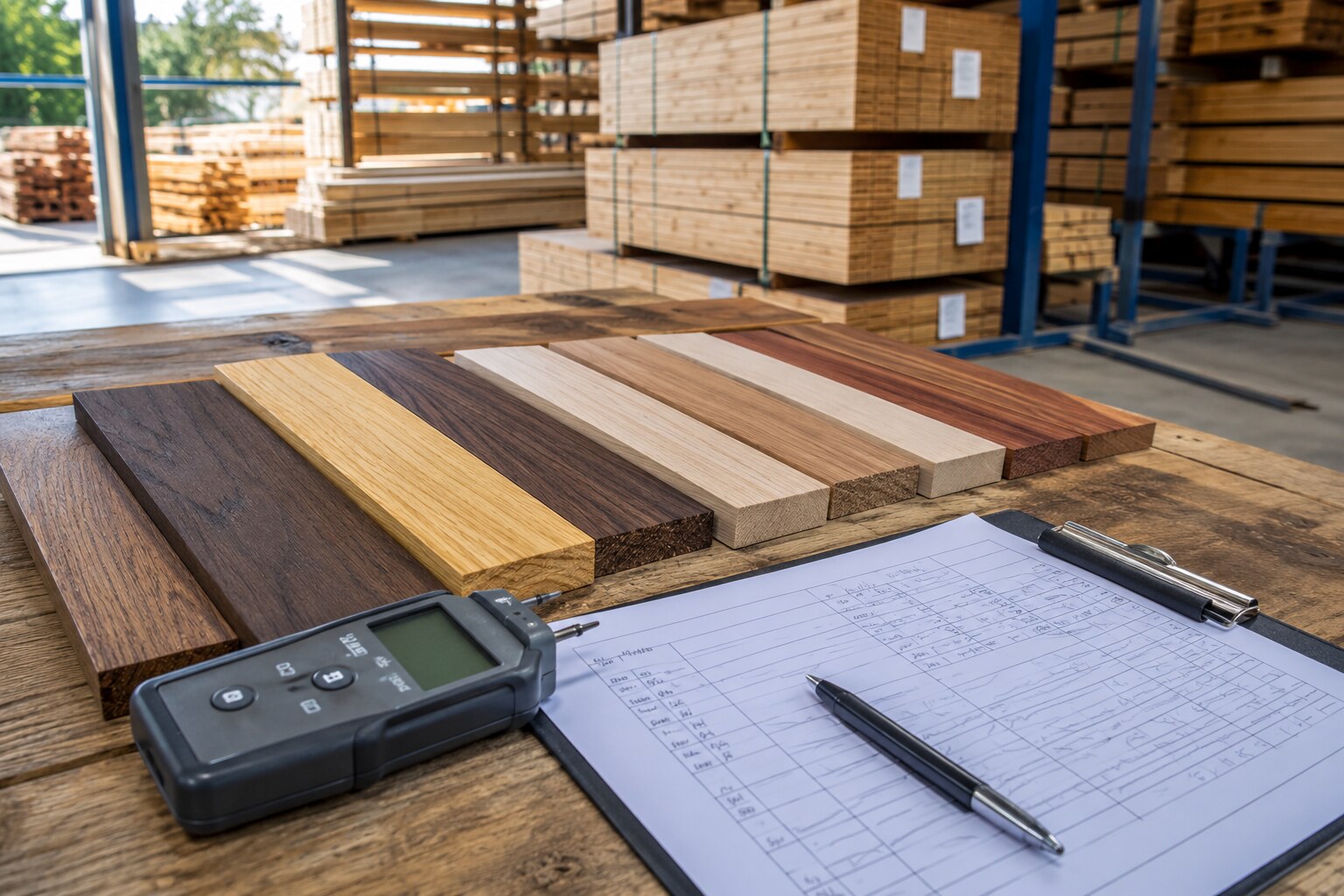
Timber certification can help a project team ask better sourcing questions, but a logo on a brochure is not the whole story. The useful task is to connect the claim to the exact product, supplier and transaction being considered.
Separate forest certification from chain of custody
Forest-management certification concerns how a forest is managed against a defined standard. Chain-of-custody certification concerns how certified material is identified and controlled as it moves through processors, traders and manufacturers. A project specification may need both ideas, but they are not interchangeable.
Different schemes use different claim categories and rules. Refer to the current documentation from the relevant certification body rather than assuming that every certified product carries the same percentage or sourcing model.
Match the certificate to the supplier
Request the supplier’s certificate number, legal entity name, scope and validity dates. Check that the entity issuing the invoice is covered and that the product type falls within the certificate’s scope. If the material passes through another distributor, ask how the claim is preserved at that stage.
Read the sales documents
For a certified claim to travel through the supply chain, the invoice or delivery paperwork may need specific information. Check the product description, quantity, claim wording and certificate identifier. Keep these records with purchase orders and approved submittals so the project team can trace the decision later.
Questions for a pre-order review
- What is the botanical and common name of the species?
- What is the stated country or region of origin?
- Which certification claim applies to this exact item?
- Is the current seller authorised to pass that claim onward?
- Will the relevant claim appear on the transaction documents?
- How are certified and non-certified stocks identified in storage?
Certification is strongest when it supports traceable procurement, not when it is treated as a decorative badge.
Keep performance in the conversation
Responsible sourcing does not replace technical specification. The selected timber must still suit the intended exposure, dimensions, finish and maintenance plan. Likewise, a durable species is not automatically the right choice if its origin or paperwork cannot be understood.
Standards and databases change, so verify certificate status using the official source close to the purchase date. For formal compliance requirements, consult the relevant scheme guidance or a qualified sustainability professional.