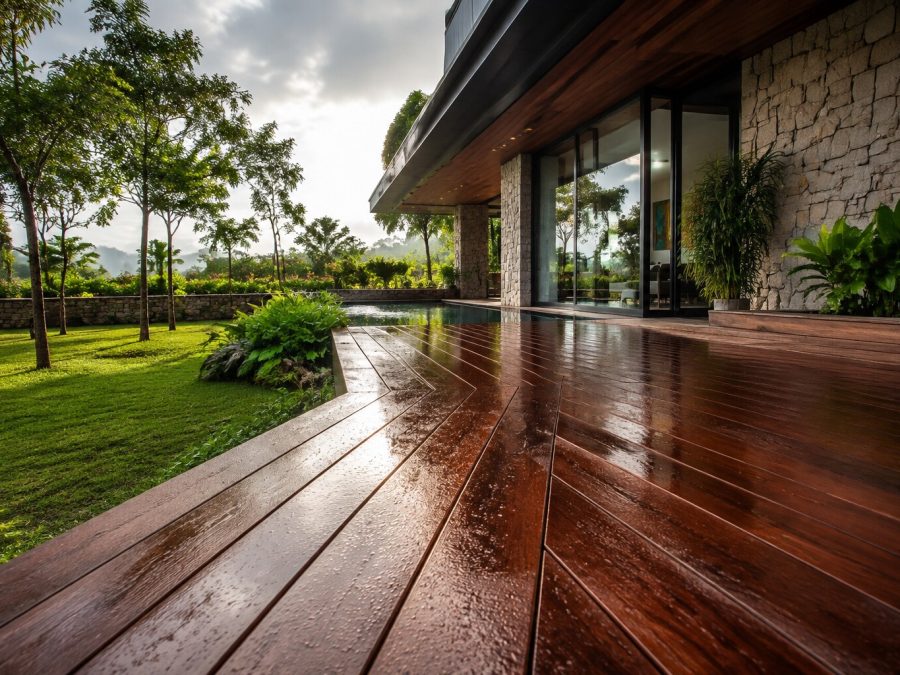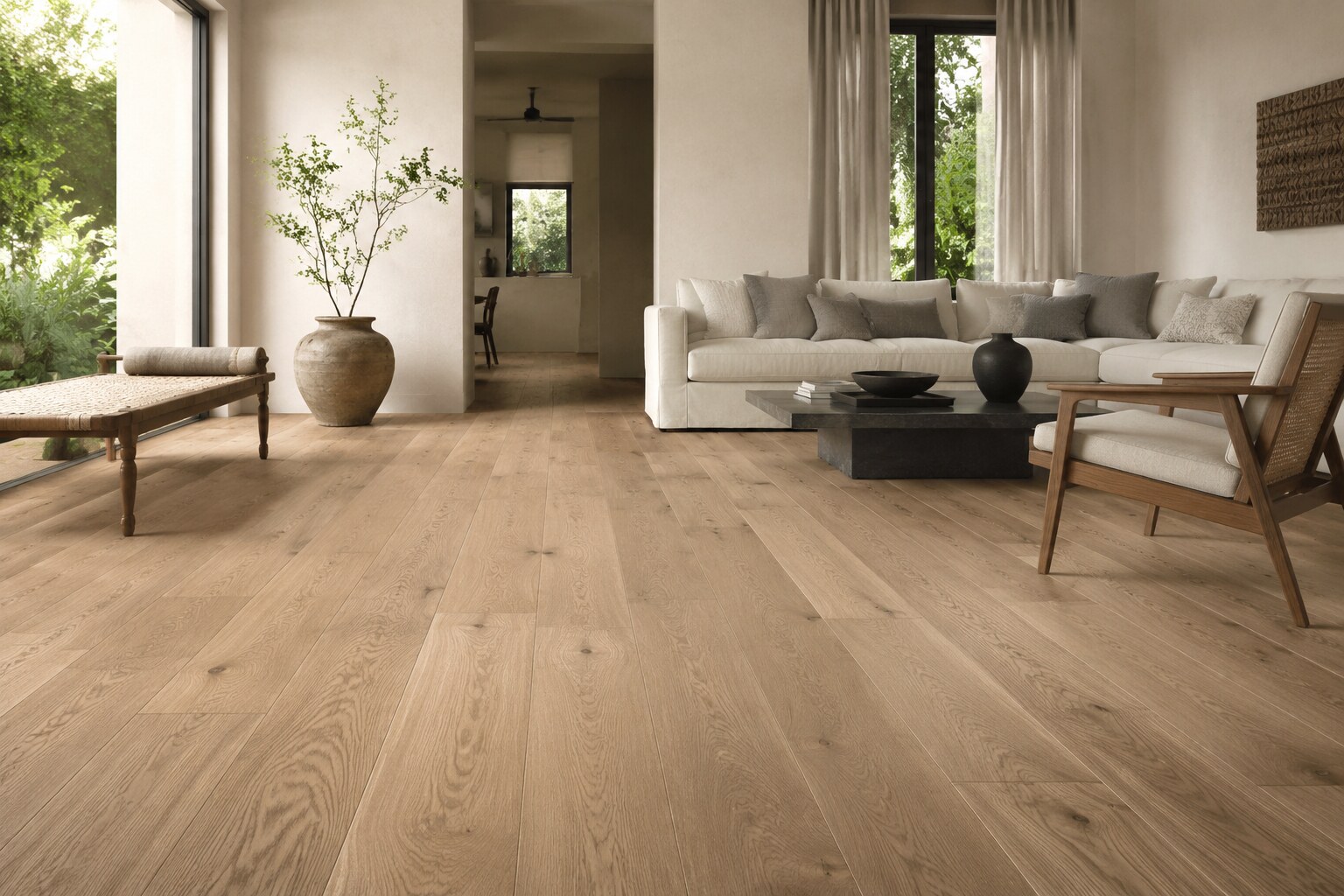
Both engineered and solid wood floors can bring warmth to an interior. The better choice depends less on which label sounds premium and more on the room, subfloor, climate control and expectations for future repair.
How the two constructions differ
A solid board is milled from one piece of timber. An engineered board uses a real-wood wear layer over a dimensionally stable core. That layered construction generally reduces movement across the board, which can be helpful where temperature and humidity vary.
| Question | Engineered wood | Solid wood |
|---|---|---|
| Dimensional movement | Usually lower | Usually higher |
| Installation options | Float, glue or fix, depending on product | Commonly fixed to a suitable base |
| Refinishing | Limited by wear-layer thickness | Potentially more cycles, subject to profile |
| Board dimensions | Wide formats are common | Width must account for movement |
Start with moisture
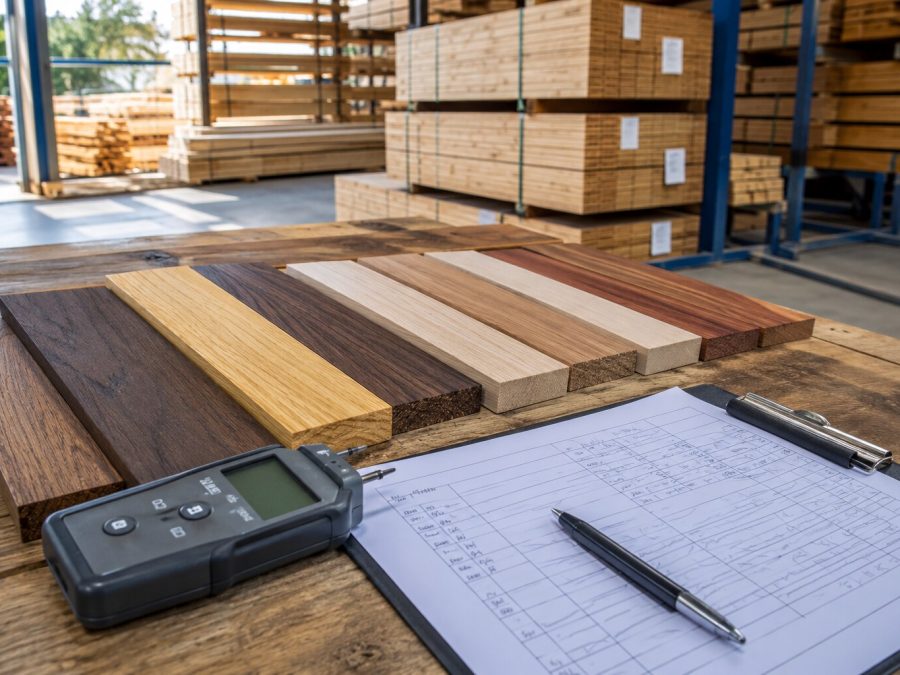
No wood floor should be installed over an unverified damp substrate. Ask for moisture readings and keep a record. New screeds require adequate drying time, and ground floors may need a correctly specified moisture barrier. Air-conditioning patterns also matter: a room cooled only occasionally can experience larger humidity swings than expected.
Look beyond the top colour
For engineered flooring, ask about the wear-layer species and thickness, core construction, total board thickness, joint profile and finish system. For solid flooring, confirm species, grade, moisture range and the intended method of fixing. Review several full boards because natural timber variation cannot be represented by a single small sample.
Plan the edges and transitions
Expansion allowances, thresholds, skirting and changes to stone or tile should be resolved before installation. Poorly placed trims can make an otherwise refined floor feel unfinished. Door clearances and the final floor build-up also need to be checked early.
A successful wood floor is a system: product, substrate, adhesive or fixing, room conditions and installer all influence the result.
Which is right for you?
Engineered boards are often practical for renovation, wider planks and rooms where extra dimensional stability is useful. Solid wood may suit clients who value traditional construction and want greater potential for future sanding. Neither option tolerates leaks or careless wet cleaning.
Before ordering, request a written specification and maintenance guide, approve a representative sample panel, and confirm who is responsible for testing the site. Those steps matter more than choosing by category alone.